Top 10 Industrial Relay Brands Compared (OMRON, IDEC, Finder & More)

Table of Contents

Choosing the right industrial relay is not about picking the cheapest component—it’s about ensuring uptime, safety compliance, and compatibility with your control system. With dozens of manufacturers on the market, procurement managers and maintenance engineers often get stuck comparing datasheets that look identical at first glance.
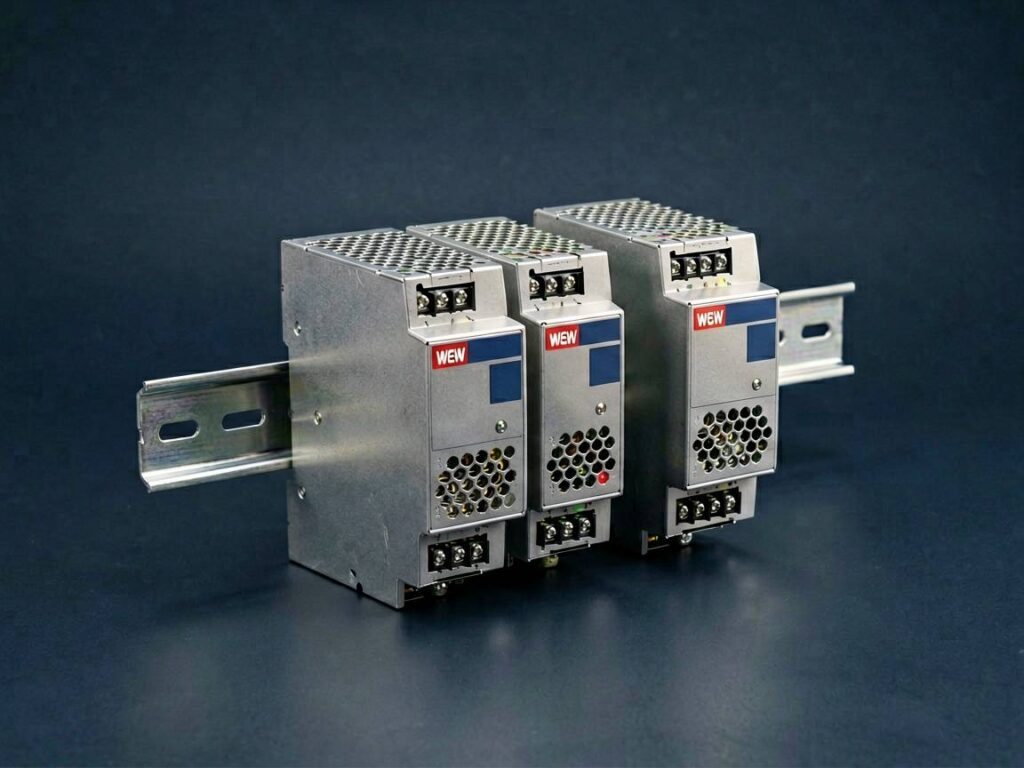
Here is the short answer: OMRON and IDEC dominate the Asian automation market with superior coil life and form-factor consistency, while Finder and Schneider Electric lead in European panel-building standards. For high-vibration environments, TE Connectivity and Weidmüller offer the most robust terminal designs. Below, we break down the top 10 brands by performance, availability, and application fit.

1. OMRON – The Benchmark for Precision and Longevity

When engineers specify an OMRON relay vs IDEC relay, OMRON typically wins on switching frequency and mechanical endurance. The LY series (LY2, LY4) and MY series are industry workhorses, rated for 20 million mechanical operations. Their bifurcated contacts reduce failure risk in low-current logic circuits.

  • Best for: High-cycle PLC output modules, CNC machinery, and semiconductor equipment.
  • Key advantage: Consistent coil resistance tolerances (±5%) across production batches.
  • Watch out: Premium pricing—sometimes 15–20% higher than comparable IDEC models.

If you need a drop-in replacement for existing OMRON sockets, our [intermediate relay](/products/relay/intermediate-relay/) inventory covers the complete LY/MY range with cross-reference compatibility.

2. IDEC – The Cost-Effective Alternative with Superior LED Visibility

IDEC’s RJ and RH series are direct competitors to OMRON but often offer better diagnostic features. The clear, high-luminance LED indicators on IDEC relays are visible even in bright control cabinets—a small detail that saves troubleshooting time. Their screwless spring-clamp terminals (on the RJ2S series) reduce wiring labor by up to 30%.

  • Best for: Material handling systems, packaging lines, and OEM machinery where budget matters.
  • Key advantage: Lower price point without sacrificing contact material (gold-plated silver alloy).
  • Watch out: Terminal spacing is tighter than OMRON—less forgiving for thick cable lugs.

For time-sensitive applications where delayed switching is required, pair IDEC relays with our [time relay](/products/relay/time-relay/) options to avoid separate timer modules.

3. Finder – European Panel-Building Standard

Finder is the default choice for European-designed control panels (DIN rail mounted). Their 55 series and 56 series offer a unique push-in test button that locks in the “on” position—a feature rarely found on Asian brands. Finder relays also have a wider operating temperature range (-40°C to +70°C), making them suitable for outdoor enclosures.

  • Best for: CE-certified machinery, HVAC controls, and marine applications.
  • Key advantage: Interchangeable with ABB and Schneider relays in most sockets.
  • Watch out: Coil voltage options are less granular—you may need to special-order 24V DC variants.

4. Schneider Electric – Safety and Smart Relay Integration

Schneider’s RXM series (part of the Harmony line) stands out for its modular plug-in system. You can add auxiliary contact blocks or a timer module directly onto the relay—no separate wiring. For functional safety circuits, Schneider’s Safety Relays (XPS series) are certified to SIL 3 and PL e.

  • Best for: Process automation, emergency stop circuits, and light curtain integration.
  • Key advantage: Seamless integration with Modbus and EtherNet/IP via smart relay bases.
  • Watch out: The base sockets are proprietary—do not mix with generic DIN sockets.

If your application requires certified machine guarding, browse our [safety relay](/products/relay/safety-relay/) category for Schneider and Pilz equivalents.

5. TE Connectivity (Potter & Brumfield) – High-Vibration Champion

TE’s P&B series (like the T9A and KUEP) are designed for extreme mechanical stress. The sealed construction with epoxy encapsulation prevents dust ingress and contact contamination—critical for mining, agricultural, and vehicle-mounted equipment. Their plug-in octal sockets are industry standard for 11-pin configurations.

  • Best for: Off-highway vehicles, elevator controls, and washdown environments.
  • Key advantage: Vibration resistance up to 10g (vs. typical 5g for OMRON).
  • Watch out: Larger physical footprint—may not fit compact terminal boxes.

6. Weidmüller – Precision for Signal Isolation

Weidmüller’s TERMSERIES (like the DRI/DRW) focus on signal integrity. They offer galvanic isolation between coil and contact up to 6kV, which prevents ground loop noise in sensitive sensor circuits. Their screw terminals are captive—no lost hardware during maintenance.

  • Best for: Weighing systems, temperature transmitters, and analog signal switching.
  • Key advantage: LED status indication on both coil and contact side (unique feature).
  • Watch out: Limited coil voltage range (only 12V, 24V, 48V, 110V, 230V AC/DC).

7. ABB – Global Availability and Heavy-Duty Contacts

ABB’s N series (formerly ABB/Stotz) are built for high inrush currents—ideal for motor starters and capacitive loads. The silver-tin-oxide contacts handle 10x the surge current of standard silver-nickel contacts without welding. ABB also offers plug-in relay bases with built-in surge suppression (RC modules).

  • Best for: Motor control centers, welding equipment, and power distribution panels.
  • Key advantage: 30% higher contact rating than comparable OMRON relays.
  • Watch out: Heavier coil pull-in current—check PLC output drive capability.

8. Panasonic – Miniature Size for PCB-Mount Applications

Panasonic’s JS and JW series are the go-to for PCB-mounted relays in electronic control boards. They offer ultra-low coil power consumption (100mW), making them suitable for battery-powered or energy-harvesting IoT devices. Their bifurcated crossbar contacts ensure reliable switching at 1mA logic levels.

  • Best for: Building automation controllers, smart meters, and medical devices.
  • Key advantage: Smallest footprint in this comparison (10x20mm).
  • Watch out: Not suitable for high-current loads above 5A.

9. Phoenix Contact – Best-in-Class Connection Technology

Phoenix Contact’s PLC-RSC series feature integrated input resistors and freewheeling diodes—no external components needed. Their push-in connection technology (spring cage) reduces wiring time by 50% compared to screw terminals. The relay base has a disconnect function that isolates the coil without removing wires.

  • Best for: High-density control cabinets (up to 300 relays per cabinet).
  • Key advantage: Tool-free wiring—just push the ferruled wire in.
  • Watch out: Requires special ferrules for stranded wire—do not insert bare wire.

10. Eaton (Moeller) – Rugged Economy for Basic Switching

Eaton’s DILM and ETR series offer the best price-to-performance ratio for basic on/off switching. Their screw terminals accept up to 6mm² wire—larger than most competitors, reducing terminal heating. Eaton relays are widely stocked in the US and Europe, making them a safe backup choice.

  • Best for: General-purpose lighting, conveyor controls, and HVAC contactors.
  • Key advantage: 50% cheaper than OMRON for the same coil voltage.
  • Watch out: No LED indication on standard models—add external pilot lights.

How to Choose: OMRON vs IDEC vs Finder – A Decision Matrix

| Factor | OMRON | IDEC | Finder |

|——–|——-|——|——–|

| Mechanical life | 20M ops | 15M ops | 10M ops |

| LED visibility | Standard | Excellent | Good |

| Terminal type | Screw (standard) | Spring-clamp (optional) | Screw + push-in |

| Coil tolerance | ±5% | ±10% | ±10% |

| Price per unit | $$$ | $$ | $$ |

| Global availability | Excellent | Good | Good (EU only) |

Rule of thumb: If you need maximum switching cycles → OMRON. If you need best value with diagnostics → IDEC. If you need a durable DIN-rail relay with test buttons → Finder.

Final Recommendation and CTA

No single brand beats all others—it depends on your control voltage, contact load, and ambient conditions. However, we strongly advise keeping spare relays from two different brands in stock to avoid supply chain bottlenecks.

At Canuri, we stock all 10 brands above with cross-reference guides to help you substitute without redesigning your panel. Whether you need an OMRON replacement for a legacy machine or a Finder relay for a new EU-built line, our engineers can match the exact coil and contact configuration.

Contact Canuri today for a quotation — we respond within 4 hours and offer same-day dispatch for in-stock relays.

FAQ

#### H3: Are OMRON and IDEC relays interchangeable?

A: Mechanically, yes—both use 8-pin and 11-pin octal sockets. Electrically, check the coil resistance. OMRON coils typically have lower resistance (e.g., 24V DC = 680Ω) than IDEC (e.g., 24V DC = 790Ω). If your PLC output card is rated for a minimum load current, the higher resistance may cause false switching. Always verify the datasheet before swapping.

#### H3: What is the difference between a relay and a contactor?

A: A relay is designed for switching low-power signals (up to 10A) with high

Get A Quote

Contact Form
Get a Quote

Get Your Automation Parts Quote Within 24 Hours

Send us the part number, quantity and your country — our team replies with a formal quotation within 24 working hours.

Contact Form